- Project
- Fleet Street, London
Fort Gilkicker, Hampshire
| Location |
|
|---|---|
| Sector | |
| Products |
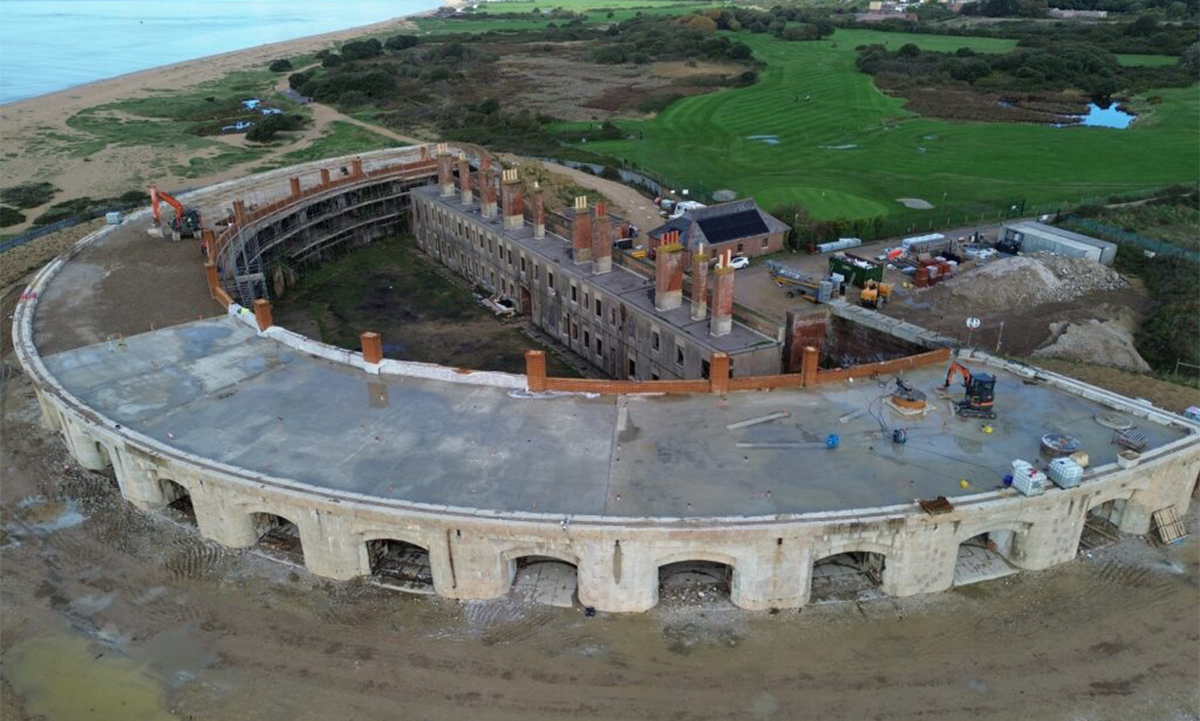
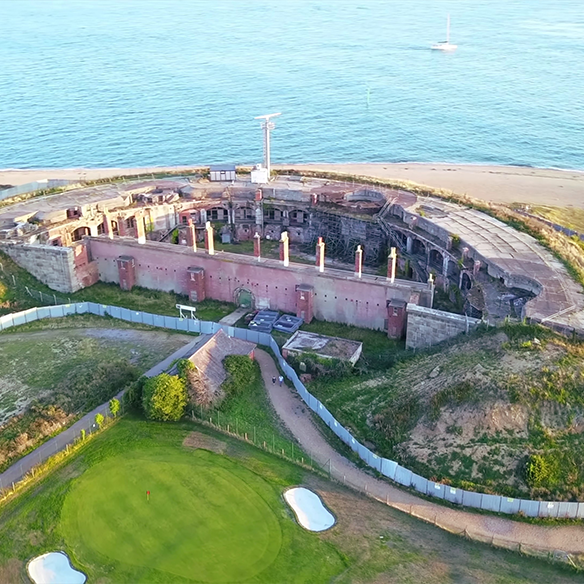
While the views offered from Gosport’s Fort Gilkicker towards the Isle of Wight made the fort an ideal site for repelling the French in the late 19th century, today the location offers a far more commercial appeal as a residential development. Given the historic building’s Grade II listed status, it was essential that the structure was closely monitored to ensure no damage was suffered during the early stages of stripping back its more recent layers of defence, with our expertise chosen for the job.
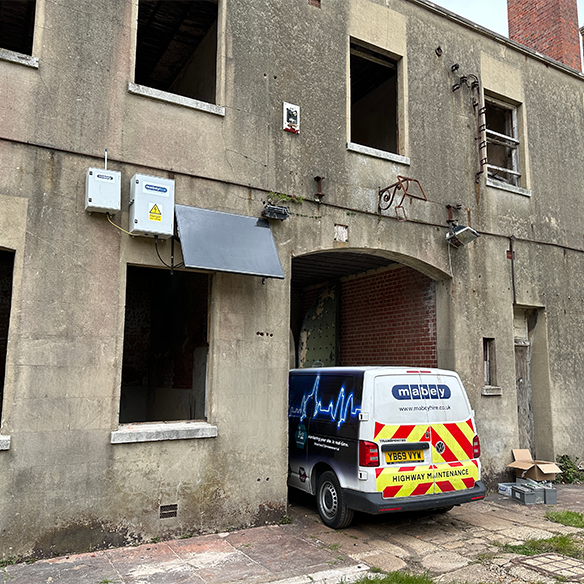
Allan continued: “The bespoke monitoring package included 22 sensors to monitor site-wide vibration, plus a further five wireless crack sensors to check if any existing cracks were getting wider.
“Due to site security concerns, we were also tasked with providing a full wireless connection, wireless logger, and wall-mounted battery box, meaning that that everything could be installed and secured from public access.”
Unusually, due to the scale of the building, we customised the system to feature ‘click-fit’ sensors, meaning that the equipment could be rapidly rearranged to monitor three adjacent arches at a time as work progressed. BD Nuclear’s own personnel were also trained in how to correctly demount and relocate sensors as required, offering significant cost savings for the client.
Jack Dougan, Operations Director for BD Nuclear, commented: “The handiest part of having this training was that there was no down time for us, and we were fully in control of the monitoring. When we were ready to move the hydraulic breaker, we could easily relocate the sensors to the arches below and then carry on the following day with no problems at all.
“Most importantly, there were no alerts triggered due to movement and Heritage England were fully satisfied with the results. I would always use Mabey Hire for monitoring requirements in the future, as well as for much of our temporary works hire needs.”
One of the benefits offered to customers by our structural monitoring service is 24/7 access to real-time data via our Insite system. Readouts from the various sensors are relayed to the main frame computer and, if pre-set limits are exceeded, will trigger alerts and enable work to be halted.
Interestingly on the Fort Gilkicker project, the monitoring sensors showed a steady rate of recovery in the structure as the overburden was taken away, as well as tracking thermal movement as the earthworks were removed and the sun began to reach the historic masonry.

For all project specific design and technical enquiries, please contact your local service team

If you want to talk to us about your project, send us an email and a brief outline of how we can help and we’ll be in touch
[email protected]